Fall Soup Recipes: Simple Pots for Busy Weeknights
Published 2026-10-16
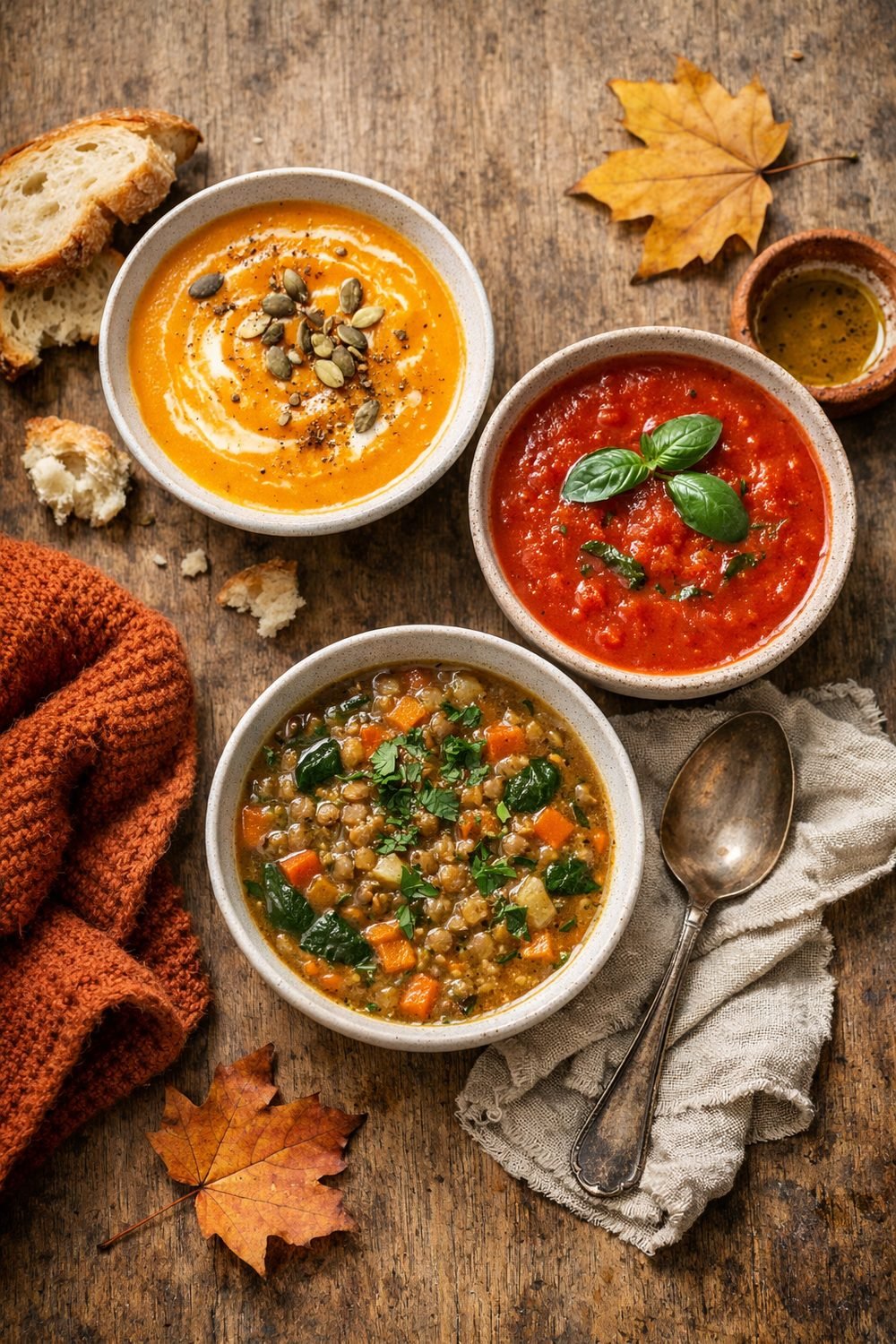
Soup is one of the easiest ways to feed a family on a busy night. You need one pot, a few plain ingredients, and about an hour of mostly hands-off time. And you usually end up with leftovers for lunch the next day, which is the part I like best.
Soup is a good weeknight option because it saves you from standing over three pans at once. Now it's a habit from October until about March. This post covers a simple method that works for almost every pot, a list of soups worth rotating, and a few safety tips for blending and storing.
Short on time? Our top picks: Breville Control Grip Immersion Blender, Cuisinart Smart Stick Immersion Blender, Le Creuset Dutch Oven and Lodge Enameled Dutch Oven. See all picks
A basic method that works for most soups
Once you know this pattern, you don't really need a recipe for most soups. You just swap the main ingredient and adjust the spices.
- Soften chopped onion, carrot and celery in a little oil over medium heat. Give it eight to ten minutes. Don't rush this part.
- Add garlic and any spices, and stir for about a minute, until it smells good.
- Add your main ingredient, such as vegetables, beans, lentils or cooked chicken.
- Cover with stock or water and simmer until everything is tender.
- Season at the end and adjust with salt, pepper or a splash of lemon.
That first step does a lot of the work. When the onion, carrot and celery cook slowly, they get sweet and soft, and the whole pot tastes deeper. If I'm in a real hurry, I'll still give them at least five minutes. Throwing raw onion straight into stock works, but the soup tastes flatter.
The last step matters more than people think. A common mistake is tasting a finished pot, deciding it's "fine," and serving it without adjusting. Then a friend squeezed lemon into her bowl and it was suddenly much better. Salt and a little acid at the end wake everything up. Taste, add a pinch, taste again.
Stock or water?
Stock gives you more flavor with less effort, so it's worth using most of the time. Boxed, homemade, or made from a paste or cube (such as Better Than Bouillon) all work. Water is fine for soups that already have strong flavors, like split pea or a spicy lentil. If you use store-bought stock, check the label for salt and season carefully at the end, since some are already quite salty.
Soup ideas to rotate through
Here's the list I keep coming back to. None of these are fancy, and that's the point.
- Chicken noodle. Use leftover roast chicken if you have it. Cook the noodles separately if you plan to have leftovers, or they soak up all the broth overnight.
- Tomato with basil. Canned tomatoes are honestly better than fresh ones for this in fall. Blend it smooth and serve with grilled cheese.
- Potato and leek. Wash the leeks really well. Dirt hides between the layers, and gritty soup is a sad dinner.
- Lentil and vegetable. Red lentils break down and get creamy. Green or brown ones hold their shape. Both are good, just different.
- Butternut squash. Roasting the squash first adds flavor, but simmering cubes in stock is faster and still tasty.
- Minestrone. This is where odds and ends from the fridge go. Half a zucchini, a handful of spinach, some beans. It forgives almost anything.
- Split pea. Cheap, filling, and thick enough to stand a spoon in by day two. Thin it with water when you reheat.
In cold months, you might aim to make two of these a week. One on Sunday or Monday, and one midweek. If you have a picky eater, chicken noodle and tomato tend to win people over first. Split pea is the one people may complain about until they taste it.
Shortcuts that actually save time
Some soup shortcuts are worth it. Others save two minutes and cost you flavor.
Worth it: frozen chopped onions, canned beans, canned tomatoes, and a rotisserie chicken from the store. Frozen mixed vegetables are fine in minestrone or chicken soup. Pre-cut squash costs more but saves a lot of peeling, and peeling a butternut squash on a Tuesday night is not my favorite thing.
What I'd skip: soup "starter" packets with long ingredient lists, and dried herbs that have been in your cupboard since you moved in. Old dried herbs taste like dust. If yours don't smell like anything when you rub them between your fingers, they won't add much to the pot.
A small one that helps: chop your onion, carrot and celery for two soups at once and keep half in the fridge. The next pot comes together much faster when that's done.
If you'd like a few of these recipes written out to keep by the stove, you can sign up for our free 3 Soup Recipe Cards in the box on this page.
Blend with care
Smooth soups like tomato, squash and potato leek need blending. Hot liquid in a sealed blender can push the lid off, and that's a real burn risk. Be careful when blending hot tomato soup, since the steam and pressure can make it spray and stain a ceiling.
If you use a regular blender, fill it only partway, maybe a third to half full. Take out the small center piece of the lid so steam can escape, and hold a folded towel over the opening. Start on low and work up slowly. Blend in batches instead of cramming it all in.
An immersion blender, the stick kind (a Breville or Cuisinart model, for example), is easier. You blend right in the pot, and there's less washing up. Keep the blade under the surface so it doesn't spatter. If you make smooth soups often, I think a stick blender is one of the few kitchen tools that earns its drawer space.
You can also let the soup cool for a bit before blending. It doesn't have to be piping hot. Just reheat it gently afterward.
Store it safely
Leftovers are half the reason I make soup, so I try to store them properly. Cool leftovers quickly, refrigerate them in a covered container, and reheat until steaming hot.
A big pot of soup holds heat for a long time, so don't leave it sitting on the stove all evening. Splitting it into smaller, shallow containers helps it cool faster. If you're not sure how long leftovers keep, check a food safety guide from your local health or food agency. They're clear and easy to follow.
Soup also freezes well in portions. I freeze mine in single servings, in containers like Pyrex glass ones, so I can grab one for lunch. A few notes from experience:
- Leave some space at the top of the container. Liquid expands when it freezes.
- Label it with the name and date. Frozen lentil soup and frozen split pea look a lot alike.
- Soups with pasta or potatoes can get a bit soft after freezing. They're still fine to eat, just not quite as nice.
- Cream-based soups can separate when thawed. A good stir while reheating usually helps.
Making a pot stretch through the week
One pot can become two or three different meals if you change how you serve it. Tuesday's lentil soup can be Thursday's lunch with a spoonful of yogurt and some toast. Leftover tomato soup works as a quick pasta sauce if it's thick enough. Chicken soup gets new life with a handful of fresh greens stirred in at the end.
Bread helps too. A crusty loaf, cornbread or plain buttered toast turns soup into a full dinner. On really lazy nights, we do soup and a big plate of cheese and crackers, and nobody complains.
Tools and staples worth considering
You don't need much gear to make good soup, but a few well-known tools and pantry items make weeknight pots easier. Here are some that fit the methods in this post.
Breville Control Grip Immersion Blender
Suits anyone who makes smooth soups like tomato, squash or potato leek and wants to blend right in the pot. Check that the blending shaft is long enough for the depth of your pot.
Cuisinart Smart Stick Immersion Blender
A familiar option for cooks who want a simple stick blender for occasional use. Check whether the parts are easy to detach and clean, since that is half the appeal.
Le Creuset Dutch Oven
Suits people who want one heavy pot that goes from stovetop to oven and holds heat evenly. Check the weight and capacity, because a full pot of soup can be heavy to lift.
Lodge Enameled Dutch Oven
A good fit if you want the same one-pot approach at a gentler cost than the premium names. Check that the size matches your usual batch, especially if you cook for a crowd.
Instant Pot
Suits busy cooks who like a mostly hands-off pot, especially for split pea, lentil and bean soups. Check the model's sauté function, since softening onion, carrot and celery first matters for flavor.
Better Than Bouillon
A paste-style stock base that suits people who don't want to keep boxes of stock around. Check the label for salt and season gently at the end.
Pyrex Glass Food Storage Containers
Suits anyone storing and reheating leftover soup, and glass is easy to reheat in. Check that the lids seal well and that the container is rated for the freezer if you plan to freeze portions.
Check current plans and prices on each brand's own site before you buy.
FAQ
Can I make soup without stock?
Yes. Water works, especially with strong flavors like split pea, lentil or a spicy bean soup. Cook your vegetables a bit longer at the start and season well at the end to make up the difference.
How do I fix soup that tastes bland?
Add salt first, a little at a time, then taste. If it still seems flat, try a squeeze of lemon or a small splash of vinegar. A spoonful of tomato paste or a bit of grated cheese on top can help too.
My soup is too thick. What should I do?
Stir in a little hot water or stock until it looks right, then check the seasoning again. Soups with lentils, split peas or potatoes thicken a lot as they sit, so this is normal with leftovers.
Which soup is easiest for a beginner?
Lentil and vegetable is hard to mess up. It's cheap, it doesn't need blending, and it tastes good even if your timing is a little off. Minestrone is a close second.
Quick recap
Soften your onion, carrot and celery, add spices and a main ingredient, cover with liquid, simmer, and season at the end. Rotate through a handful of simple soups, use the shortcuts that help, and be careful when you blend anything hot. Cool and store leftovers properly, and freeze some in portions for later.
If you want an easy place to start, grab the free 3 Soup Recipe Cards by entering your email in the sign-up box on this page. Print them, stick them inside a cupboard door, and pick one for this week. Then make a pot on your busiest night and see how much easier dinner feels.
Some links on this site may earn us a commission. Read our disclosure.